ngrok's MCP server: valid YAML is not a rollout decision.
The new connectivity tools can inspect traffic and change production policy. Token scopes, client prompts and rollout checks do different jobs.
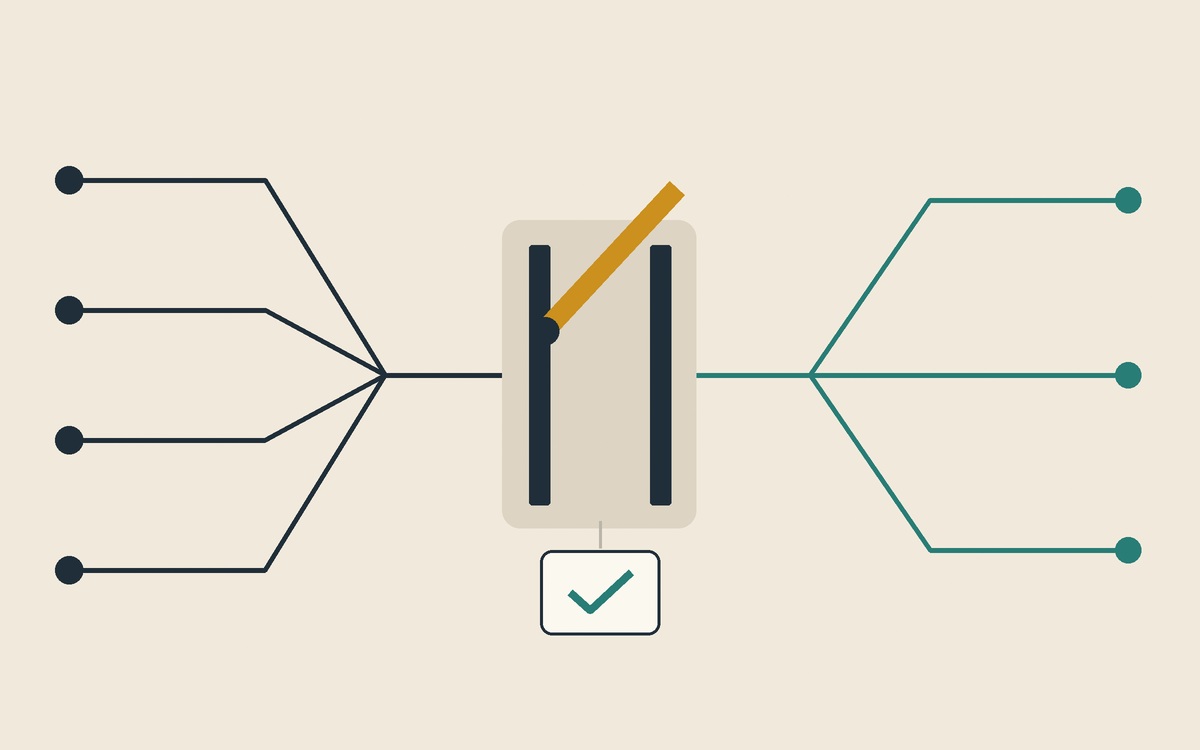
Original GigSoul illustration: network routes pass through an approval gate. Conceptual, not a product screenshot.
A coding agent can write a valid traffic rule and still be one approval away from changing who can reach a live service. ngrok's new MCP server makes that distinction worth checking before the first write.
In its November 16 launch post, ngrok describes an agent removing a site's login wall, blocking scanner paths, setting a rate limit and adding a country cookie. Those are the vendor author's examples, not GigSoul tests. The useful detail is where the cookie example pauses: the rule has passed validation, but saving it starts a production rollout. The agent waits for a separate go-ahead.
That pause should be part of the job, not a conclusion drawn from a green validator result.
Connection consent and change approval do different work
The current documentation says access is not read-only. Within the approved scopes and the signed-in user's role, the server can create, change and delete resources, including Cloud Endpoints, domains, IP policies and secrets. A connection suitable for inspecting traffic need not include the write permissions needed to change its routing.
Most clients sign in through OAuth. The launch post says those access tokens expire after 15 minutes, refresh during use and require connection approval again after a week. That short access-token lifetime is not a promise that an unattended connection stops after a quarter-hour.
Clients without OAuth can use a personal access token with chosen scopes and expiration. The docs specifically recommend read-only PAT scopes to keep an agent read-only. API keys and ngrok authtokens are not accepted by this MCP server. This is not a reason to paste a PAT into a chat; ngrok explicitly warns against doing so.
Validate the rule, then review its effect
ngrok marks tools as read-only, mutating or destructive, and says most clients use those markers to request approval. "Most" is a client-behavior qualification, not a universal confirmation gate. Keep the prompts enabled and inspect the actual proposed change.
For a traffic-policy update, a practical review should name the endpoint, show the existing and proposed rules in execution order, and state which routes or visitors should change. Validation belongs before that decision. Readback and a focused check of both affected routes and unaffected pages belong after it.
The vendor's scanner example makes another useful distinction: its successful blocked requests were the author's own probes, not evidence that a real scanner had been stopped. A demonstration result should stay a demonstration result.
Check the other place configuration can change
The example-prompts documentation says the MCP server cannot edit the local ngrok agent configuration file, but a coding agent can edit it itself. Reviewing the remote policy alone therefore may not cover the complete change. Ask which local or deployment files the coding agent also touched and whether a later deploy would preserve or replace the intended policy.
The first useful session can be a read-only inventory. Add write access for a defined change when it is needed. A rule that parses, a token that permits the call and a person approving the rollout are different checks. Keep them separate.
Documentation review only. GigSoul did not connect an account, run the MCP server, change an endpoint or test these controls.