OpenAI's $750 Billion Bet: The Infrastructure War Has Already Been Decided
The GPU is table stakes. The real competition is who can pour the most concrete, run the most wire, and pay the most in property taxes. OpenAI just...
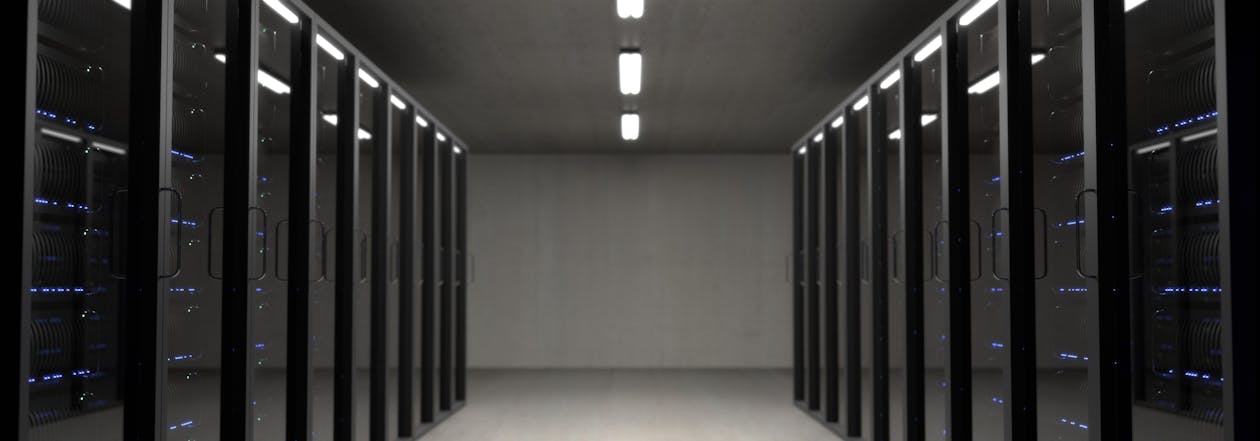
OpenAI announced this week it will spend $750 billion on infrastructure through 2030. That's up 25% from earlier estimates, and it marks a fundamental shift in what AI competition actually looks like. The models are commoditizing faster than anyone expected. The infrastructure won't.
Project Camellia: The Opening Move
The first concrete move — literally — is Project Camellia. OpenAI is building a data center campus on 1,400 acres northwest of Savannah, Georgia. It will draw at least 3.2 gigawatts of power from Georgia Power, making it one of the largest dedicated power draws in the state's history.
To put that in context: 3.2 gigawatts is enough to power roughly 2.4 million homes. OpenAI has negotiated the right to curtailed draw by up to 1 gigawatt during grid stress events — which means they're not paying for full capacity around the clock, but they've secured the right to flip it on when they need it. The generating capacity itself won't come online until 2028–2032, but OpenAI recently hired Brett Mayo, who oversaw xAI's Memphis Colossus build, to run data center construction. Colossus went from dirt to GPU in record time. That playbook is coming to Georgia.
Georgia is giving OpenAI a 50% property tax abatement for 15 years from Effingham County. That's not charity — it's a bet that $20 billion in construction payroll and long-term employment will more than make up the difference. Other states will be making similar calculations.
Where the Power Actually Comes From
Here is the uncomfortable part of the story. Georgia Power's regulatory filings show most of the new generation capacity contracted for OpenAI will run on natural gas. The utility plans to build or buy about 5.8 gigawatts of natural gas capacity — with a meaningful chunk coming from simple-cycle turbines, which are the least efficient and most polluting form of gas generation. This new fossil fuel build will more than double Georgia Power's existing gas fleet.
The remainder will come from grid-scale batteries and solar, which is real but currently insufficient to carry a 3.2 gigawatt load. AI companies want to talk about their clean energy commitments. The math doesn't fully add up yet — not at this scale, not on this timeline.
The Stargate project, OpenAI's earlier infrastructure initiative with Microsoft and SoftBank, appears to have stalled, according to TechCrunch. Tariffs and permitting delays slowed the original plan. Project Camellia is a different approach: direct utility negotiation, county-level tax breaks, and a land-first strategy that sidesteps some of Stargate's more complicated partnership dynamics.
The Infrastructure Moat Is the Only Moat
One year ago, the conventional wisdom was that AI would be won at the model layer. Compute was a commodity. The best model would win. That narrative is crumbling.
What the $750 billion figure tells you is that OpenAI has concluded the opposite: model capability is becoming interchangeable fast, but the ability to run inference at scale — cheaply, reliably, close to customers — is not. Whoever controls the data centers controls the pricing. Whoever controls the pricing controls which applications can exist. That's infrastructure as competitive strategy, and it's a far more durable position than "our LLM is slightly better at math."
Meta has reportedly circulated an internal memo estimating the industry has roughly 20 months to rebuild its digital infrastructure for an AI-agent-native world. That's not hyperbole — that's a company that has watched OpenAI and Google and xAI all rush to lock up power, land, and permitting, and concluded that the window to secure the physical layer is closing.
Who's Left Out
The uncomfortable truth is that most AI companies are now caught in a structural disadvantage they cannot easily close. Building data centers at this scale requires years of lead time, billions in capital, and relationships with utilities and local governments that smaller players simply do not have. The hyperscalers — Microsoft, Google, Amazon — have these relationships. OpenAI is building them. Everyone else is renting.
That creates a tiered industry where the top players own the underlying economics of AI, and the rest compete on margin. That is a very different AI industry than the one evangelists promised.
What Comes Next
OpenAI has not said when the first GPU at Camellia will power on. But Brett Mayo's hiring suggests they are targeting speed over caution — the Colossus playbook applied to a more favorable regulatory environment. If Georgia delivers on permitting, this build will move faster than most observers expect.
The $750 billion figure will also invite scrutiny from regulators who are already struggling to understand AI at a conceptual level, let alone track whether infrastructure investments of this scale serve national interests or simply entrench incumbents. That conversation is coming — probably faster than anyone in Washington is prepared for.
The infrastructure war is not a metaphor. It is a $750 billion line item. And right now, OpenAI is winning it.